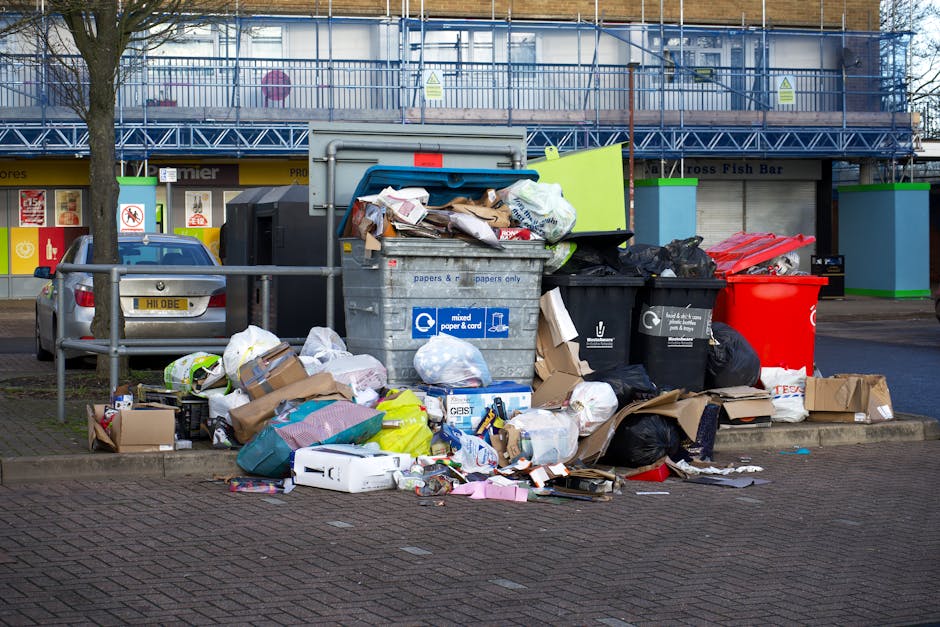
Barkingside High Street rubbish removal guide IG6
If you are trying to clear junk, old furniture, builders' debris, or a stubborn pile of mixed waste around Barkingside High Street, you probably want one thing: a straightforward way to get it sorted without turning your week upside down. This Barkingside High Street rubbish removal guide IG6 is here to help with exactly that. It explains how rubbish removal usually works locally, what to check before you book, what can go wrong, and how to choose the best option for your home, flat, shop, or office.
High street rubbish removal can be more awkward than people expect. Parking is tighter, access can be fiddly, and waste often builds up in bits and pieces rather than in one neat load. The good news? With a bit of planning, it becomes much easier. You do not need to overthink it. You just need the right sequence, a few sensible checks, and a clear idea of what service fits your situation.
Practical takeaway: the best rubbish removal is usually the one that matches your access, waste type, volume, and timing, not just the cheapest headline price.
Table of Contents
- Contents
- Why Barkingside High Street rubbish removal guide IG6 matters
- How Barkingside High Street rubbish removal guide IG6 works
- Key benefits and practical advantages
- Who this is for and when it makes sense
- Step-by-step guidance
- Expert tips for better results
- Common mistakes to avoid
- Tools, resources and recommendations
- Law, compliance, standards, or best practice
- Options, methods, or comparison table
- Case study or real-world example
- Practical checklist
- Conclusion
- Frequently Asked Questions
Why Barkingside High Street rubbish removal guide IG6 matters
Barkingside High Street has a very everyday kind of complexity to it. There are homes, flats, small businesses, shops, and all the usual clutter that builds up when life gets busy. A broken wardrobe appears. A sofa hangs around too long. A shop refit creates packaging and offcuts. Suddenly you have rubbish that needs removing, and not much room to deal with it.
That is why a local rubbish removal guide matters. It helps you make better decisions before you book. If the waste is bulky, heavy, awkward, or mixed, you need a service that can lift, load, and clear it efficiently. If the job involves access challenges, shared entrances, or limited parking, you need to think ahead. A little planning saves a lot of faff later. To be fair, that is true for most things in London.
There is also a trust angle. Waste should be handled properly, moved safely, and taken to the right place. Nobody wants rubbish left on the street because a collection was rushed, nor do they want to discover later that something was not disposed of correctly. Clear expectations make the whole process calmer.
For many readers, this topic is not about general theory. It is about the practical question: how do I clear this without wasting time, money, or energy? This guide focuses on that exact decision.
How Barkingside High Street rubbish removal guide IG6 works
In simple terms, rubbish removal means a team comes to your property, assesses the waste, loads it, and takes it away. The key difference from a skip is that you do not usually need to do the heavy lifting yourself. That is a big deal if you are dealing with bulky furniture, old appliances, or bags that have ended up down the side of a building in a slightly awkward heap.
Here is the usual flow:
- You describe the waste, access, and rough volume.
- A quote or estimate is given based on the load and the work involved.
- A collection time is arranged, often with some flexibility.
- The team arrives, checks access, and confirms the load before work begins.
- Items are removed, sorted where possible, and taken away for disposal or recycling.
The exact process depends on the provider and the type of waste. For example, household clutter is not the same as builders' rubble or office clearances. A mixture of sacks, broken chairs, and a fridge will need more careful handling than a simple bag collection. If you have a flat with narrow stairs, or a business unit that needs clearing after hours, timing and access matter even more.
If your waste is mainly large household items, it may be worth looking at furniture disposal or a broader home clearance service, depending on how much needs to go. For heavier loads from a renovation, builders waste clearance is usually the more suitable route.
One thing people often overlook: the quote is not just about the waste. Access, carrying distance, parking pressure, and item weight all influence the work. A sofa from a ground-floor room is a very different job from a sofa on a fourth-floor landing. Obvious, maybe, but it is where price misunderstandings often start.
Key benefits and practical advantages
Rubbish removal sounds simple, but the real value is in what it saves you. Time, effort, stress, and sometimes a sore back. There is a reason people choose a collection service instead of trying to do several runs in a family car or borrow a mate's van on a rainy Sunday afternoon.
- Convenience: the waste is taken from where it sits, so you are not dragging it around yourself.
- Speed: clearances can often be arranged quickly when the job is straightforward.
- Better handling: awkward items like wardrobes, white goods, and mixed junk are handled by people used to lifting them.
- Less disruption: useful if you live or trade on a busy high street.
- More suitable for mixed loads: rubbish removal can cover a broader mix than a single-purpose collection.
There is a quieter benefit too: peace of mind. Once the clutter is gone, the space feels different. A back room feels bigger. A shop stock area becomes usable again. A hallway stops looking like a storage unit that gave up. You notice the change immediately, even if the pile has been there for months.
If your waste includes a mattress or bulky sofa, a dedicated service can be helpful. See mattress and sofa disposal for a more focused approach when those items are the main issue. For a broader clear-out of a property, house clearance or flat clearance may be more practical.
Who this is for and when it makes sense
This guide is useful for a surprisingly wide mix of people. If you live near Barkingside High Street or run a business there, chances are you will recognise at least one of these situations.
- Homeowners and tenants clearing unwanted furniture, box clutter, or end-of-tenancy waste.
- Landlords and letting agents managing urgent turnarounds between occupiers.
- Shop owners who need packaging, broken displays, or old stock removed.
- Office managers dealing with old desks, chairs, filing cabinets, or archive waste.
- Builders and tradespeople with renovation debris that needs moving fast.
- People clearing storage areas like lofts, garages, or sheds that have become accidental junk vaults.
It makes sense when the waste is too much for normal bins, too heavy for easy DIY disposal, or too awkward to move safely. It also makes sense when you simply do not want to spend your evening loading a van in the drizzle while traffic hums past and someone is asking where the dust sheets went. That scene is familiar enough, unfortunately.
If your main problem is a cluttered storage space, you may find garage clearance or loft clearance a better fit. For day-to-day commercial waste needs, business waste removal can provide a more regular solution.
Step-by-step guidance
If you want a smoother collection, the best approach is to prepare in stages. It does not need to be complicated, just organised.
- Sort the waste into rough groups. Separate furniture, bags, garden waste, electrical items, and builders' waste if you can.
- Identify anything special. Fridges, appliances, and potentially hazardous items should be mentioned early.
- Check access. Measure doorways, stairwells, gate widths, or tight corners if you suspect a bulky item may be tricky.
- Clear a path. Move small items, shoes, plant pots, or anything that might slow carrying.
- Take photos if asked. A few good pictures usually help with quoting and planning.
- Confirm the load and timing. Make sure the booking reflects what is actually there, not what you hope it looks like once you stand back and squint.
- Be ready at collection. If there is a gate code, loading bay issue, or parking restriction, say so in advance.
A small tip from real life: if you are clearing a room in a hurry, put a "keep" zone and a "go" zone in two different corners. It sounds very basic. It is very effective. You will make fewer mistakes when the space is divided clearly.
For broken appliances or white goods, see fridge and appliance removal. If your job is more about everyday household contents than one category of item, home clearance can be the better all-round option.
Expert tips for better results
Here are the little things that make a big difference. Nothing flashy. Just the kind of details that stop a simple job becoming a messy one.
- Be honest about the volume. Understating the load is the quickest route to a frustrating quote change.
- Flag awkward items early. A smashed wardrobe, cast-iron bath panel, or damaged appliance can affect handling.
- Keep recyclables separate if possible. Mixed waste is still manageable, but separation can improve sorting efficiency.
- Ask about access assumptions. If parking is not simple on the high street, make that clear from the start.
- Check what can be loaded safely. Not every waste type is suited to the same service, especially if it is sharp or contaminated.
One practical observation: the people doing the collection usually know in the first minute whether the job will be simple or fiddly. If you have been accurate in your description, that first minute goes much better for everyone. Less back and forth. Fewer surprises. Everyone breathes easier.
If your clear-out is office-based, office clearance may give you a better fit than a generic collection. For confidential paperwork and private documents, you may also want confidential shredding as part of the plan.
Common mistakes to avoid
Most rubbish removal problems are preventable. The same issues crop up again and again, and they are usually avoidable with a bit of foresight.
- Leaving sorting until collection day: that tends to create confusion, delays, and sometimes extra cost.
- Forgetting about access: tight staircases, lift restrictions, or no-parking areas can slow the job down.
- Ignoring special items: fridges, mattresses, and hazardous materials need to be mentioned clearly.
- Assuming every service does the same thing: some focus on household waste, others on business, builders', or garden waste.
- Booking on price alone: a cheap quote that does not reflect the real job can be a headache later.
There is also the classic mistake of hiding the worst bit of the pile behind the easier bit. People do it. They really do. Then everyone is surprised when the collection takes longer than expected. Better to be upfront from the start.
If your waste includes broken shelving, soil, branches, or other outdoor material, see garden clearance. For renovation leftovers, builders waste clearance is usually the more appropriate route than a general household booking.
Tools, resources and recommendations
You do not need specialist tools to prepare for rubbish removal, but a few basics make the job easier.
- Heavy-duty bin bags for loose household waste.
- Gloves for sharp edges, dust, and splinters.
- Measure tape for checking awkward furniture and access points.
- Marker pen and tape to label keep items, sell items, and remove items.
- Basic phone photos to show the load before booking.
When you are comparing options, it helps to know whether you need a one-off collection or something broader. A single sofa, for example, does not call for the same setup as an entire flat clear-out. For a simple item-level job, furniture clearance may be enough. For larger domestic jobs, house clearance often makes more sense.
If you are thinking about disposal methods more generally, it can also help to understand what would and would not go into a skip. The page on what can go in a skip is a useful reference point when you are weighing up collection versus container-based disposal.
For readers who care about where waste ends up, recycling and sustainability is worth a look too. It is a sensible reminder that not all waste should be treated as the same, even if the pile on the floor looks very mixed at first glance.
Law, compliance, standards, or best practice
Waste removal in the UK sits within a framework of expected good practice. You do not need to know every regulation to book a collection, but it does help to understand the basics.
In practical terms, waste should be carried, handled, and disposed of responsibly. That means the collection provider should be able to manage the material safely, identify items that need special treatment, and avoid dumping waste somewhere unsuitable. If you are a business, there is usually a stronger need to keep records and ensure your waste is handled in a compliant way. The details depend on the nature of the waste and the job itself, so it is wise to ask questions if anything seems unusual.
Best practice also includes insurance, sensible manual handling, and clear communication about what is being removed. If a job involves heavy lifting, narrow access, or potentially awkward items, it should be planned rather than rushed. That is just common sense, but common sense is often what keeps things safe.
You may also want to check service information around health and safety policy, insurance and safety, and payment and security if you are choosing a provider for a larger or more sensitive job. It is not overthinking. It is just being careful, which frankly pays off.
Options, methods, or comparison table
People usually choose between a few practical options: a man-and-van style rubbish removal service, a skip, a targeted clearance service, or doing it themselves. The right answer depends on access, waste type, and how much lifting you want to do.
| Method | Best for | Strengths | Trade-offs |
|---|---|---|---|
| Rubbish removal collection | Mixed loads, bulky items, quick clear-outs | Minimal lifting for you, flexible, convenient | Needs accurate description of the waste and access |
| Skip hire | Longer projects, DIY work, ongoing filling | Useful if waste is produced over time | Space needed, loading is your responsibility |
| Targeted clearance service | Specific categories such as furniture, loft, garage, or office items | More tailored, often cleaner planning | Less suitable if the waste is very mixed |
| DIY disposal | Very small loads and people with time and transport | Can be cheap for tiny jobs | Time-consuming, physically demanding, and not ideal for large items |
If you are on Barkingside High Street and space is tight, rubbish removal collections often make the most sense because they reduce the burden on you. That said, if you are clearing a renovation site with waste arriving over several days, a skip-style approach may work better. Neither is "best" in a vacuum. It depends on the job, and that is the honest answer.
Case study or real-world example
Imagine a small shop near Barkingside High Street that has just finished a mini refit. There are cardboard sleeves, broken shelving, an old counter unit, packaging straps, and a few heavy offcuts from the back room. Nothing especially dramatic, but enough to block movement and make the place feel like it is still under construction.
The owner could spend a morning trying to break everything down, source transport, and figure out where each item should go. Or they could book a collection, explain the access issues, and have the lot removed in one visit. In a real-world setting, the second option is usually the calmer one. The shop gets its space back, staff stop stepping around piles, and the refit starts to look finished instead of half-done.
A similar thing happens in flats. Someone clears the spare room, finds an old mattress, a wardrobe panel, two broken stools, and three bags of mixed stuff that were "temporarily" stored there for about six months. The room goes from unusable to clear in one go. Not glamorous, but very satisfying. There is a little moment when you stand in the empty room and hear the echo. That is when you know it was worth it.
For household examples like that, flat clearance or home clearance can be the nearest match. For larger, heavier furniture jobs, furniture disposal keeps the task nicely focused.
Practical checklist
Use this checklist before you book or on the morning of collection. It keeps the whole thing clean and simple.
- Identify exactly what is going.
- Separate keep items from remove items.
- Check for stairs, narrow doors, lifts, or loading restrictions.
- Measure any bulky furniture or appliances.
- Flag fridges, mattresses, or special waste in advance.
- Take clear photos if a quote depends on them.
- Make sure the access route is clear.
- Confirm the collection time and who will be present.
- Check how payment is handled.
- Ask where the waste will be taken if you need reassurance.
If you are clearing a larger property, it can also be useful to review house clearance, garage clearance, or loft clearance depending on where the clutter lives. Funny how the clutter always chooses the hardest-to-reach room, isn't it?
Get a free quote today and see how much you can save.
Conclusion
Barkingside High Street rubbish removal does not need to be complicated. Once you know what you are clearing, how much access there is, and what kind of waste you have, the rest becomes a practical booking decision. That is really the heart of this guide. Make the job clear, and the collection becomes much easier to manage.
If you remember nothing else, remember this: accurate information at the start usually leads to a smoother collection, a fairer quote, and less stress on the day. Whether you are clearing a flat, office, shop, garden, or storage space, the right approach is the one that suits the actual job in front of you.
And once the pile is gone, the space feels lighter. Quietly better. A bit more yours again.
Frequently Asked Questions
What does rubbish removal on Barkingside High Street usually include?
It usually includes the collection, loading, and disposal of household junk, furniture, mixed waste, or bulky items. Some services also handle appliances, light commercial waste, and renovation debris, depending on the booking.
Is rubbish removal better than hiring a skip for a high street property?
For many Barkingside High Street properties, yes, because access and parking can be tighter than on quieter residential streets. Rubbish removal is often easier when you want the waste taken from inside or from an awkward location without doing the lifting yourself.
How do I know which type of clearance I need?
Look at the main waste type. Furniture usually points to furniture clearance or furniture disposal. A full property move-out may suit house clearance or flat clearance. Garden debris is better handled through garden clearance, and building debris through builders waste clearance.
Can I book rubbish removal for a small load?
Yes. Small loads are common, especially when people are clearing a room, a cupboard, or one bulky item. The important part is being clear about the size so the quote matches the real job.
What should I do before the collection team arrives?
Sort the waste, clear the access route, and make sure anything fragile or personal is removed from the "go" pile. If you can, take photos and confirm any parking or entry instructions in advance.
Are appliances and fridges removed as part of rubbish removal?
Often yes, but they should be mentioned separately. Fridges and similar items may need specific handling, so it is sensible to book through fridge and appliance removal if they are a major part of the job.
What happens if my waste includes something potentially hazardous?
You should flag it before booking. Hazardous items are treated differently and may not be accepted in a standard load. If there is any doubt, check the provider's guidance and use a dedicated hazardous waste disposal route where needed.
How long does a typical rubbish removal job take?
It depends on the load size and access. A small, straightforward collection can be very quick, while a larger clear-out with stairs, narrow hallways, or mixed waste may take longer. Access often matters more than people think.
Is there a difference between home clearance and general waste removal?
Yes, though they overlap. Home clearance is more about clearing contents from a property, room, or area. General waste removal is broader and may suit mixed rubbish, ongoing household clutter, or commercial waste that does not fit a single category.
How do I make sure the waste is handled responsibly?
Choose a provider that communicates clearly about collection, disposal, and safety. It also helps to review pages like recycling and sustainability, health and safety policy, and insurance and safety so you know the provider takes the job seriously.
Can rubbish removal help with end-of-tenancy clear-outs?
Yes, absolutely. End-of-tenancy jobs often involve mixed waste, furniture, left-behind items, and general clutter. A flat clearance or home clearance approach is often the easiest fit for those situations.
What is the biggest mistake people make when booking rubbish removal?
The most common mistake is underestimating the amount or type of waste. If the collection team arrives expecting a small pile but finds a much larger or more complex load, the job becomes slower and more expensive than it needed to be.
How should I choose between rubbish removal and a specialist clearance service?
Choose the service that best matches the main job. If it is mainly furniture, use furniture disposal or furniture clearance. If it is a loft, garage, office, or garden, use the relevant specialist page. If it is a mixed pile with no neat category, general waste removal is often the most practical option.